Curcuminoids Contain:
- anti-inflammatories
- antioxidants
- anti-tumor properties
Because of this, curcumin has a clear link with
fighting infection and diseases. Increasing your turmeric intake could help your body fight against inflammatory diseases like pancreatitis and irritable bowel syndrome, chronic diseases like diabetes and Alzheimer’s, and even cancer.
There’s got to be a catch, right? Well there is.
Curcumin has a low bioavailability.
What does that mean?
Very simply put, bioavailability is how much of something we absorb into our bodies. So if something has a low bioavailability – like curcumin – then our bodies don’t get all its got to offer. Does this mean we should just eat more of it?
No
What we need to do is find the best way to boost curcumin’s bioavailability. Get all the health benefits turmeric has to offer by using these little tricks:
1. A Little Fresh Black Pepper?
Black pepper is
medicinal in its own right, but when added to turmeric it significantly increases the way your body responds to the healthy and helpful curcumin within. Studies show that when we eat turmeric, our bodies show a slight bump in curcumoids, but when black pepper is added, the levels skyrocket.
“The same amount of curcumin consumed, but the bioavailability shoots up 2000%. Even just a little pinch of pepper—1/20th of a teaspoon—can significantly boost levels,”
2. Healthy Fats
Turmeric needs to be combined with a fat for our bodies to fully absorb it and realize its health benefits. Even just eating turmeric whole is a good idea; the natural oils found in turmeric (fresh, dried, or as a powder) make the bioavailability of curcumin way stronger, meaning your body gets more out of it.
“When it doesn’t dissolve properly, curcumin has a tough time getting into the gut, which is where most of the immune system lives,” explains Dr. Joseph
Mercola, a health philanthropist and best-selling author.
Curcumin is fat-soluble, so add it into your sauces and dressings for a kick of taste, colour, and health benefits.
3. Turn Up The Heat
This is where the cooking comes into play. All you need is a little heat and the curcumin benefits are all yours. Dr. Saraswati Sukumar, oncologist and pathologist at the Johns Hopkins Center, advises using turmeric not-so-sparingly:
“I use turmeric in every sauté, just a quarter teaspoon, a half teaspoon is enough. But you don’t have to use it sparingly – use it lavishly. The best way to take it, I feel, is to use it in your cooking very extensively. If you have any sauté, just sprinkle it in. The moment you heat oil and add turmeric to it, it now becomes completely bio-available to you.”
So there you have it. Combine turmeric with black pepper, healthy fats (like coconut oil, or
ghee)and heat it up. It’s a delicious way to get the most out of the spice, and you won’t even notice how healthy you’re being.
- Increase lifespan.
- Protect the liver oxidative stress.
- Kill fungus more effectively than ginger, clove and oregano.
- Induce tumor cell death in the deepest parts of individual cells.
- Kill bladder cancer cells.
- Destroy lung cancer cells.
- Lower blood cholesterol levels.
- Protect against cognitive/memory defects from heavy ion irradiation.
1. Chronic Inflammation and Pain
The journal Oncogene published the results of a study that evaluated several anti-inflammatory compounds. It found that aspirin (Bayer, etc.) and ibuprofen (Advil, Motrin, etc.) are least potent, while curcumin is among the most potent anti-inflammatory and anti-proliferative agents in the world. This means turmeric not only has great promise with chronic pain, but since it has less side effects, it may provide safe, lasting results!
2. Rheumatoid Arthritis
Due to its high anti-inflammatory properties, turmeric is highly effective at helping people manage rheumatoid arthritis (RA). A recent study out of Japan evaluated its relationship with interleukin (IL)-6, the inflammatory cytokine known to be involved in the RA process, and discovered that curcumin “significantly reduced” these inflammatory markers. This suggests that regular turmeric use could be a potent strategy to prevent the onset of RA from developing to begin with!
3. Depression
Researchers from the Government Medical College (Bhavnagar, Gujarat, India) published the results of the first study this past April to evaluate curcumin’s ability to manages depression in a controlled setting. Taking 60 volunteers diagnosed with major depressive disorder (MDD) and diving the group to determine how patients treated by curcumin compared against fluoxetine (Prozac) and a combination of the two, it discovered that that the principal curcuminoid in turmeric is not only as effective as Prozac in managing depression, it doesn’t carry with it all the dangerous side effects as anti-depressive drugs do. According to the paper, “This study provides first clinical evidence that cur cumin may be used as an effective and safe modality for treatment in patients with MDD.”
4. Diabetes
Turmeric is shown to lower blood glucose levels and reverse insulin resistance. For instance, an article published in Biochemistry and Biophysical Research Communications shared a study out of Auburn University that discovered curcumin suppresses glucose production in the liver. Fascinatingly, researchers proved that it’s actually 400 times more potent than Metformin (a common diabetes drug) in activating AMPK and its downstream target acetyl-CoA carboxylase (ACC). Turmeric acted as an anti-diabetic and antioxidant in diabetes, especially type 1 diabetes , improved metabolic function and reduced the risk of plaque buildup in the arteries of type 2 diabetes patients .
5. Cancer
Recent studies show turmeric is a powerful adversary to cancer. Curcumin shows a marked ability to inhibit cancer cell growth, boost antioxidant levels and the immune system, and kill cancer cells. It seems to work on improving mitochondrial function at a cellular level, and it improves metabolism. Even against drug-resistant strains of leukemia, curcumin caused cell death of cancer cells.
6. Skin and Aging
Turmeric has many healing properties for skin. It’s a natural anti-inflammatory so it reduces redness or other skin irritations. It’s antibacterial, so it’s great for blemishes, acne and skin balance. Turmeric is wonderful at improving the texture of the skin because it is an exfoliant but also rich in antioxidants. It’s a wonderful natural treatment inside and out!
7. Brain Health and Memory
It’s all in your head … literally. This vital organ is the fundamental keeper of everything you’re able to think, act or dream. By taking turmeric, you can improve the oxygen intake of the brain, which helps in all of the brain’s functions and processes. Turmeric is extremely healing for the brain and for increasing memory function. Not surprisingly, when your brain functions at its best, then you increase the uptake of hormones, such as seratonin and melatonin. So, by healing the basic functioning of the brain, you can also heal other mental illnesses.
Turmeric vs. Modern Medicine
- Anti-inflammatories
- Anti-depressants (Prozac)
- Chemotherapy
- Anti-coagulants (aspirin)
- Pain killers
- Diabetes drugs (Metformin)
- Arthritis medications
- Inflammatory bowel disease drugs
- Cholesterol drugs (Lipitor)
- Steroids
Turmeric Dosage
Turmeric dosage mainly depends on age. For instance, adults are generally recommended to follow these guidelines:
- Supplement: 450 milligrams of curcumin capsules each day or up to 3 grams of turmeric root daily (divided into several doses).
- Tea: 1 to 1.5 grams of dried root steeped in 5 ounces of water for 15 minutes twice daily.
- Oil: ½ tablespoon of turmeric oil three times daily.
For children, it’s reported that there is “no proven or safe medicinal dose of turmeric in children.” With that said, I recommend “culinary doses” by regularly including it into your natural health meal plan as you would any other spice or herb. This way you can rest assured that your kids get their fair share of turmeric benefits every day. To give you a feel for the dosage amount, it’s been reported that the, “Average dietary intake of turmeric in the Indian population may range between 2 to 2.5 grams, corresponding to 60 to 200 milligrams of curcumin daily.
Turmeric Side Effects
While the pros of turmeric health benefits usually outweigh the cons, it’s important to know that there can be some side effects with turmeric. Some people report allergic reactions to turmeric, especially after skin exposure. Typically, this is experienced as a mild, itchy rash. In addition, high doses of turmeric have been observed to cause: (
17)
- Indigestion
- Heart burn
- Nausea
- Diarrhea
- Liver problems
- Increased risk of bleeding
- Increased liver function tests
- Hyperactive gallbladder contractions
- Alopecia (hair loss)
- Hypotension (lowered blood pressure)
- Uterine contractions in pregnant women
- Increased menstrual flow
People taking certain medications should also be careful when using turmeric in their food or supplementing with it. Turmeric may interfere with anti-coagulants like aspirin, clopidogrel and warfarin. It also can affect medications such as nonsteroidal, anti-inflammatory drugs. As with any herb or supplement, use as directed.
Turmeric Uses
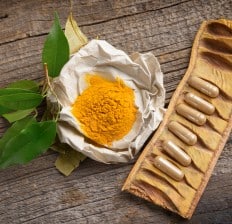
You can take turmeric in many ways depending on what you want to treat. For healing and medicinal properties, it’s easiest to take in capsule form. If you want to enjoy the turmeric benefits of beauty enhancing and anti-aging qualities, add it into your face mask or buy a turmeric facial scrub. Lastly, and certainly not least, you can add turmeric to your food. Try it in soups or a marinade, or add to your rub next time you grill! It’s so versatile and delicious!
Turmeric Tea Recipe
Total Time: 5 minutes
Serves: 2
INGREDIENTS:
- 1 cup cocnut milk
- 1 cup water
- 1 tablespoon ghee
- 1 tablespoon honey
- 1 tablespoon turmeric (powder or grated root)
DIRECTIONS:
- Pour coconut milk and water into the saucepan and warm for 2 minutes
- Add in butter, raw honey and turmeric powder for another 2 minutes
- Stir and pour into glasses.
Disclaimer: This article and others on this site are for information purposes only and not intended to treat, prevent or diagnose any diseases; consult your holistic doctor before making major changes to your diet or lifestyle.


 Turmeric curcumin is so effective at managing these health concerns that after examining the research, I found that
